Monday brief
Eight Secrets of the Taj Mahal
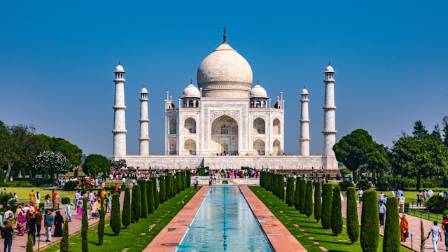
For anyone visiting India for the first time, the Taj Mahal is an essential stop. This iconic mausoleum in Agra stands as India’s most celebrated monument and a timeless symbol of love. Commissioned by Mughal Emperor Shah Jahan between 1632 and 1647, it was built in memory of his beloved wife, Mumtaz Mahal, who tragically died during childbirth. Despite its global renown, many aspects of the Taj Mahal’s history remain mysterious. Here are some intriguing insights about this marble masterpiece.
Morgan Ellis
Desk note
Brief tip
The full sticky-note brief continues below on the Monday desk.
Board
Desk Notes
For anyone visiting India for the first time, the Taj Mahal is an essential stop. This iconic mausoleum in Agra stands as India’s most celebrated monument and a timeless symbol of love. Commissioned by Mughal Emperor Shah Jahan between 1632 and 1647, it was built in memory of his beloved wife, Mumtaz Mahal, who tragically died during childbirth. Despite its global renown, many aspects of the Taj Mahal’s history remain mysterious. Here are some intriguing insights about this marble masterpiece.
Optical Illusions Abound
The Taj Mahal’s architects and artisans were masters at manipulating perspective. When you first approach the main gateway, the monument seems much closer and larger than it really is. Yet, as you move nearer, it appears to shrink—a visual trick that defies expectations. Similarly, the minarets that surround the tomb look straight, but in fact, they lean slightly outward. This clever design ensures both aesthetic symmetry and structural safety, so that in the event of an earthquake, the towers would fall away from the central tomb.
The Most Famous Legend May Be False
A popular story claims that Shah Jahan, determined to make the Taj Mahal unmatched in beauty, mutilated the hands and eyes of the craftsmen to prevent them from replicating it. While this tale adds dramatic flair to the romance, historians have found no evidence to support it, making it more myth than fact.
The Cenotaphs Are Empty
Inside the Taj Mahal, the cenotaphs of Mumtaz Mahal and Shah Jahan sit in an eight-sided chamber, surrounded by delicate marble lattice work and intricate inlays of semi-precious stones. But these are only symbolic monuments. The actual tombs rest in a quiet crypt below, at the garden level, hidden from view.
Nearly Perfect Symmetry
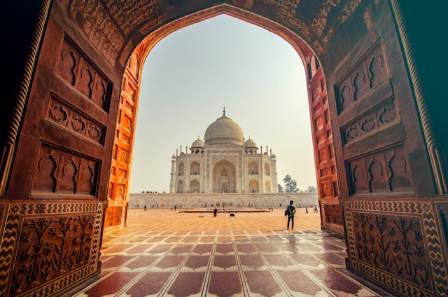
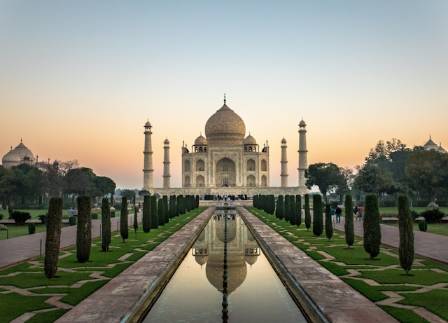
The Taj Mahal is a pinnacle of Mughal design, built with meticulous symmetry. The domed tomb is flanked by minarets, and a central reflecting pool mirrors the main structure. The gardens are divided into four quadrants, while twin red sandstone buildings—a mosque to the east and a guesthouse to the west—maintain visual balance. However, Shah Jahan’s cenotaph is placed slightly west of the central axis, breaking perfect symmetry and sparking speculation that he may not have intended to be buried there at all.
Regular “Facials” for the Monument
Over time, pollution and age have dulled the Taj Mahal’s luminous white marble, giving it a yellowish-brown tint. To restore its glow, the monument occasionally receives a mud treatment called multani mitti, a traditional Indian skincare remedy. Applied and scrubbed off with brushes, this treatment removes discoloration and brings back the Taj’s brilliant sheen.
Changing Colors Throughout the Day
One of the Taj Mahal’s most captivating features is its shifting color. Depending on the light, the marble transforms: soft gray and pale pink at dawn, dazzling white at midday, warm orange-bronze at sunset, and a translucent blue under the moonlight. Special viewing tickets are even offered for full moon nights and eclipses.
A “Black Taj Mahal” Was Once Planned
Local lore suggests that Shah Jahan intended to build a mirror image of the Taj Mahal across the Yamuna River, using black marble, where he would be entombed. However, construction allegedly stopped when his son—ironically Mumtaz Mahal’s own child—overthrew him and imprisoned him in nearby Agra Fort. Many historians regard this story as folklore rather than historical fact.
A Monument of Power as Well as Love
While the Taj Mahal is celebrated for its romantic symbolism, it also served as a statement of imperial authority. Shah Jahan’s ordered symmetry and grand scale reflected Mughal power and control. The lavish use of precious materials—crystal, lapis lazuli, Makrana marble, and turquoise—demonstrated his reign’s grandeur, ensuring that the monument was not only a tribute to love but also a showcase of political might.
More from this board
NOTE · en

How Solar Panels Are Changing the Clean Energy World
A solar panel is a device that changes sunlight directly into clean electricity. These units use interconnected photovoltaic modules made of specialized semiconductor materials. Sunlight strikes these materials and energizes tiny subatomic particles called electrons. These moving electrons create a steady direct current that powers electrical devices or charges storage batteries. People frequently refer to these units as solar modules or photo electric panels.
NOTE · en

The Comfort of Flames
Bonfires are never mournful. They flicker, dance, and glow with a life of their own. Their crackling sounds and wavering light have a way of drawing people close—both physically and emotionally. We circle around these fires, sharing in their warmth just as we share in the presence of others. Bonfires form a ring of equality—no one claims more than their portion, and everyone is welcome. Laughter, stories, and music often follow, as if the fire breathes life into shared moments. Particularly in hill towns, no evening feels complete without a fire; it's almost as if it justifies the long trip through cold terrain.
NOTE · en

Otters Are One of Nature’s Most Friendly Animals
A trio of lovable animals at Tanganyika has captured the attention of everyone who meets them. Our three otter brothers, Shrimp, Wonton, and Wasabi, are impossible to resist with their large eyes, soft fur, and tiny paws. Their adorable appearance is only part of what makes these animals so appealing. Otters are also known for their fascinating behavior, which is a major reason people find them so lovable and easy to relate to.
NOTE · en
The Gate to the East A Striking Gateway to Suzhou
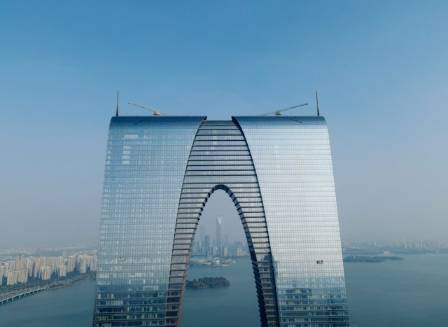
The Gate to the East is the tallest building in Suzhou, Jiangsu, China, and was conceived as a symbolic entrance or gateway to the city. Standing 301.8 meters (990 feet) high, this office complex has been described as the world’s largest gateway building.
NOTE · en

8 Must-Try Classic Dim Sum Dishes for Your Next Yum Cha
Yum cha menus are overflowing with options—from dumplings and steamed rice to buns and fried seafood—and there are some classic Cantonese-style dishes that are non-negotiable orders for any dim sum lover. Over years of enjoying yum cha across Asia and Australia with family and friends, I’ve stuck to a go-to lineup of these beloved bites, only occasionally branching out to try something new.
NOTE · en

Chongqing's Ultimate Thrill: Raffles City Skywalk
Chongqing is a city unlike almost anywhere else in the world. Often called the “mountain city” or “3D city,” it is built among mountains and waterways, with roads and buildings arranged across dramatically different elevations. After dark, the city becomes an extraordinary display of lights and towering structures that creates a scene difficult to find anywhere else.