Monday brief
NASA’s AI Rovers to Explore the Moon Autonomously
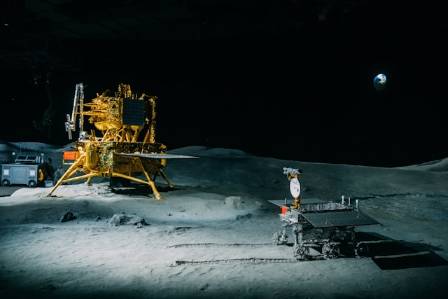
NASA is sending three autonomous rovers to the Moon under the CADRE mission, an innovative experiment in cooperative robotic exploration. These suitcase-sized machines will navigate the lunar surface independently, using cameras and radar to study both the surface and subsurface. Their success could influence the future of space missions by showing how fleets of robots can collect data and support astronauts without needing direct human control.
Charlie Davis
Desk note
Brief tip
The full sticky-note brief continues below on the Monday desk.
Board
Desk Notes
NASA is sending three autonomous rovers to the Moon under the CADRE mission, an innovative experiment in cooperative robotic exploration. These suitcase-sized machines will navigate the lunar surface independently, using cameras and radar to study both the surface and subsurface. Their success could influence the future of space missions by showing how fleets of robots can collect data and support astronauts without needing direct human control.
Three NASA Rovers Begin Lunar Journey
NASA has prepared and shipped three compact rovers from the Jet Propulsion Laboratory (JPL) in Southern California, marking the first stage of their trip to the Moon. These rovers are part of CADRE (Cooperative Autonomous Distributed Robotic Exploration), a demonstration project designed to prove that multiple robots can operate together to gather information autonomously. Outfitted with cameras and ground-penetrating radars, they will take images of the lunar terrain and test advanced software that enables teamwork without instructions from Earth.
In February, a JPL team packed the rovers and delivered them to the facility where they will attach to a commercial lunar lander ahead of launch. CADRE’s success could lay the foundation for future missions involving multiple robotic explorers.
Journey to the Moon: Launch Details
The CADRE rovers are scheduled to launch aboard IM-3, Intuitive Machines’ third lunar mission, with a launch window extending into early 2026. As part of NASA’s Commercial Lunar Payload Services (CLPS) initiative, the rovers will deploy from the Nova-C lander in the Reiner Gamma area on the Moon’s western near side. Solar-powered and roughly the size of a suitcase, they will operate during the 14-Earth-day lunar daytime, demonstrating how autonomous teams of robots could assist astronauts and carry out extensive scientific surveys simultaneously.
NASA engineers have tested the mechanism that will lower the rovers onto the Moon from the lander, ensuring smooth deployment. Each rover will be lowered by a tether system, one per rover, during the mission.
Rigorous Testing Ensures Space Readiness
The CADRE hardware underwent construction and extensive testing to confirm its durability for space travel, completing this stage in February 2024. Each rover was mounted on its deployer system for safe transit, then secured in protective metal frames and shipped to Intuitive Machines’ Houston facility. The transport was completed successfully on February 9, ensuring the rovers arrived safely for integration with the lunar lander.
Excitement Mounts for Launch
Coleman Richdale, JPL’s assembly, test, and launch operations lead, expressed enthusiasm for the project, emphasizing the team’s dedication in building and testing the rovers. The rovers, along with a base station and a monitoring camera system, will be integrated with the lander alongside other NASA payloads in preparation for launch.
About CADRE
CADRE is a NASA technology demonstration focused on testing collaborative autonomous operations with multiple robots on the Moon. Managed by JPL, the mission was developed under NASA’s Game Changing Development program within the Space Technology Mission Directorate. Selected through the Lunar Surface Innovation Initiative, the project supports technology advancement for long-term human presence on the Moon.
The mission will deploy solar-powered rovers to demonstrate cooperative autonomy without direct human intervention. Using cameras and ground-penetrating radar, the rovers will map the Moon’s surface and subsurface while testing coordination software for multi-robot operations.
NASA’s Glenn Research Center and Ames Research Center contributed to the project, with Motiv Space Systems designing and building critical hardware. Clemson University provided research support. The mission will launch on an Intuitive Machines lander as part of NASA’s CLPS program. Success could pave the way for future lunar missions using teams of autonomous robotic explorers.
More from this board
NOTE · en

What Bibimbap Means and Why It’s Special
Bibimbap is a traditional Korean dish whose name comes from two parts: “bibim,” meaning mixing, and “bap,” meaning rice. The concept is simple but layered—rice is combined with seasoned meat and a variety of vegetables that may be sautéed, blanched, fermented, or pickled.
NOTE · en
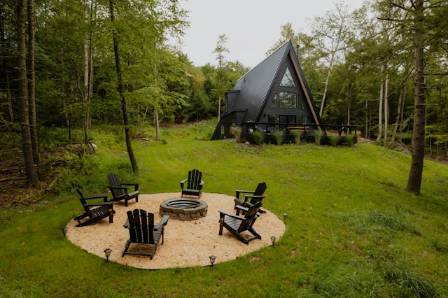
Top 7 Dreamy Mountain Cabins for the Perfect Winter Escape
As snow begins to softly blanket the forests and mountain peaks, there's no better time to fantasize about a peaceful retreat to a cozy cabin in the woods. These serene hideaways offer the perfect blend of rustic charm and modern comfort, creating an inviting escape from the hustle of everyday life. Whether you’re looking for seclusion, scenic views, or a cozy spot by the fire, these seven mountain cabins offer something for every winter wanderer.
NOTE · en

Five Potential Health Benefits of Lotus
The lotus plant is an aquatic species available in various colors. Its leaves, petals, and seeds can be prepared and eaten in multiple ways. Consuming lotus may provide certain health advantages.
NOTE · en

The world's most famous deserts
When people hear the word “desert,” they often picture endless seas of sand, towering dunes rising hundreds of meters high, sweeping winds crossing barren landscapes, and golden sands glowing beneath the sun before disappearing into the darkness of night. These vast regions seem far removed from human civilization and represent some of the most extraordinary natural scenery on Earth.
NOTE · en

Discovering Asia's Breathtaking Rice Terraces
For centuries, Asia has been synonymous with rice cultivation, a practice deeply woven into the cultural fabric and identity of its nations. In the delta regions, rice grows in flat paddies, while in the mountainous areas, farmers have ingeniously transformed steep hillsides into a patchwork of terraces. These terraces allow water from rain, rivers, and mountain streams to cascade down, nourishing each level while helping to prevent soil erosion. Join us as we explore some of the most stunning rice terraces across Asia, where nature and culture intertwine beautifully.
NOTE · en

Paint Watercolor Sunflowers In Easy Steps
Vincent Van Gogh’s abstract sunflower paintings from the 1880s remain iconic and continue to inspire artists around the world. In this guide, we’ll explore how to capture the vibrant energy of sunflowers in a loose, expressive watercolor style using just a few essential colors.