Monday brief
Advancing Industrial Robotics: High-Performance Automation for Unstructured Environments
Modern global commodity markets are increasingly competitive, placing significant strain on both conventional production methods and the human workforce. While safety expectations in the mining and metals sectors are rising, the physical demands on operators often subject them to substantial risks. Many of these roles require human judgment and dexterity that are notoriously difficult for standard machines to replicate, making complete automation a persistent challenge.
Bruce Calder
Desk note
Brief tip
The full sticky-note brief continues below on the Monday desk.
Board
Desk Notes
Modern global commodity markets are increasingly competitive, placing significant strain on both conventional production methods and the human workforce. While safety expectations in the mining and metals sectors are rising, the physical demands on operators often subject them to substantial risks. Many of these roles require human judgment and dexterity that are notoriously difficult for standard machines to replicate, making complete automation a persistent challenge.
Industrial robotics have evolved over sixty years to master repetitive tasks in controlled manufacturing settings. However, the transition to the rugged, unpredictable environments of mining requires more than just a standard robot. Success in these sectors depends on intelligent system integration—engineering a comprehensive solution where the robotic hardware is only one component of a much larger, reliable ecosystem.
Engineering Resilience for Extreme Conditions
Mining and metallurgical operations are characterized by intense heat, corrosive atmospheres, heavy dust, and significant impact loads—all of which can rapidly degrade standard machinery. Designing for these environments requires decades of expertise in heavy equipment reliability. By applying these principles to robotics, standard units can be upgraded with specialized coatings and protective shielding to ensure they perform with the same durability as heavy-duty industrial plant equipment.
Furthermore, many of these processes cannot be easily constrained or fixed in place. To overcome this, advanced robotic systems utilize a suite of intelligent sensors to provide the machine with a sense of "sight." Depending on the specific task, 2D machine vision, 3D structured light, or laser triangulation sensors can be integrated via custom software. This allows the robot to identify and localize moving or unfixtured components in real-time, synchronizing its movements "on-the-fly" without requiring the production line to stop.
Dexterity through Force Control and Telerobotics
One of the greatest strengths of a human operator is the sense of touch and the ability to adapt to resistance. While robots were originally designed for precise position control, the integration of force transducers allows them to handle tasks requiring constant pressure or limited force. This "soft-axis" capability gives the robot a compliant touch, enabling it to behave with the dexterity needed for sensitive mechanical interactions.
In scenarios where a task is too complex for full automation, telerobotics offers a middle ground. This technology allows a trained operator to control a robot from a remote, safe location. A telerobotic system combines human judgment with the physical advantages of a machine—such as the ability to lift heavier loads, reach further, and withstand toxic or high-temperature atmospheres. Using proprietary haptic feedback technology, operators can even "feel" the robot's interactions, maintaining an intuitive connection to the work while remaining out of harm's way.
From Concept Development to System Deployment
Building a successful robotic solution begins with a rigorous definition of the problem and an exploration of potential options. By partnering with technical institutions and industry leaders, organizations can rapidly develop physical proof-of-concepts. These small-scale trials are essential for de-risking new technologies before they are deployed in a full-scale industrial environment.
The final implementation of these systems relies on multidisciplinary teams that bridge the gap between digital transformation and physical machine design. A comprehensive approach includes everything from the initial engineering study to the final installation and commissioning. By integrating control technology with deep process expertise, custom robotic solutions can solve the most difficult industrial challenges, providing long-term support and after-sales service to ensure continuous operational success.
More from this board
NOTE · en
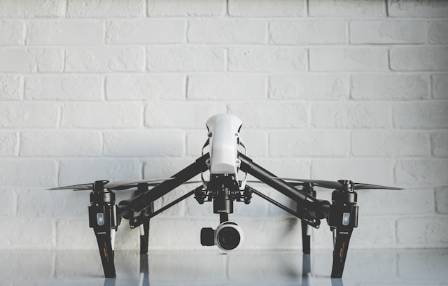
AI Guides Drones in Uncertain Environments
An autonomous drone tasked with dropping water to fight a wildfire in the Sierra Nevada could face powerful, shifting Santa Ana winds that push it off its intended path. Adjusting to these unpredictable disturbances in real time is a major challenge for any flight control system.
NOTE · en

10 Modern Window Seat Ideas
A thoughtfully designed window seat can bring both beauty and practicality to almost any room. Combining a comfortable place to sit with a well-positioned window creates a warm, naturally bright corner where you can read, relax, take a nap, or simply enjoy the scenery outside. From compact reading spaces to spacious daybeds and storage-friendly benches, there are countless ways to design a window seat that suits your home.
NOTE · en

Raccoons: Clever Survivors of the Wild and Urban World
The raccoon (Procyon lotor) is classified among the carnivores, a mammalian group traditionally made up of animals that primarily consume meat. However, many members of this group are also capable of eating berries, fruits, vegetables, eggs, acorns, beech and hickory nuts, grains, grasses, and bark when other food sources are scarce. Carnivorous mammals have five toes and prominent canine teeth. Raccoons are omnivores, and the proportion of plant and animal foods they consume changes according to the season and what is available in their surroundings.
NOTE · en

How to Build a Snow Cave
A quinzee is a large mound of snow that is allowed to harden before being hollowed out to create a simple snow shelter. In many ways, it is a homemade snow cave that can provide protection during winter conditions.
NOTE · en

Leading Wildlife and Animal Artists
Wildlife and animal art encompasses a vast spectrum of techniques and perspectives, ranging from whimsical character studies to breathtakingly realistic portrayals. Creating art centered on the natural world often stems from a deep-seated affection for the subjects, resulting in works that capture the true essence of the animal kingdom. Whether it is the vibrant playfulness of a stylized portrait or the meticulous precision of a hyper-realistic drawing, the genre continues to captivate collectors globally.
NOTE · en

Keeping Your Outdoor Cat Safe
As a cat owner, few things are more stressful than letting your feline explore the outdoors and worrying whether they’ll return safely. While venturing outside can be exciting and stimulating for cats, it also exposes them to a range of hazards—from cars and predators to other animals and environmental dangers. If you want your outdoor cat to enjoy fresh air while staying safe within your property, you’re not alone. Many pet owners struggle with this balance, and the good news is there are several strategies to encourage your cat to remain in your yard.