The Snow Leopard: Asia’s Elusive Mountain Ghost

Monday brief

The Snow Leopard: Asia’s Elusive Mountain Ghost

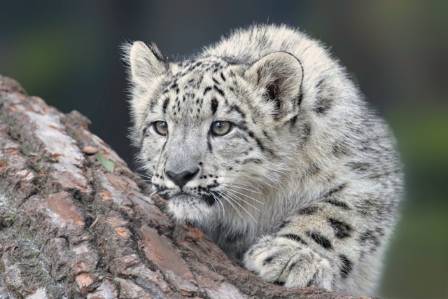
The snow leopard (Panthera uncia) is one of the most enigmatic and captivating big cats on Earth, a master of survival in the harshest high-altitude environments. Nicknamed the “mountain ghost” for its shy, reclusive nature, this spotted feline rarely reveals itself to human eyes, making it a symbol of the wild, untamed beauty of Asia’s mountain ranges. With a set of extraordinary adaptations tailored to its icy habitat, the snow leopard stands as a testament to nature’s ingenuity—yet it faces mounting threats that push this vulnerable species closer to the brink. Below is a detailed exploration of its biology, habitat, behavior, and the urgent efforts to protect it.

E

Evelyn

Desk note

Brief tip

The full sticky-note brief continues below on the Monday desk.

Board

Desk Notes


The snow leopard (Panthera uncia) is one of the most enigmatic and captivating big cats on Earth, a master of survival in the harshest high-altitude environments. Nicknamed the “mountain ghost” for its shy, reclusive nature, this spotted feline rarely reveals itself to human eyes, making it a symbol of the wild, untamed beauty of Asia’s mountain ranges. With a set of extraordinary adaptations tailored to its icy habitat, the snow leopard stands as a testament to nature’s ingenuity—yet it faces mounting threats that push this vulnerable species closer to the brink. Below is a detailed exploration of its biology, habitat, behavior, and the urgent efforts to protect it.

Basic Profile: A Master of High-Altitude Survival

Adapted perfectly to thrive in frigid, rocky terrain, the snow leopard boasts a suite of physical traits that set it apart from other big cats. Adults measure 4 to 5 feet in body length, with a tail stretching up to 36 inches—nearly as long as their body—while their weight ranges from 60 to 120 pounds. Their thick, dense fur comes in shades of gray or creamy yellow, dotted with grayish-black spots that act as camouflage against the snow and rock of their mountain home, allowing them to stalk prey undetected. Wide, fur-covered paws serve as natural snowshoes, distributing their weight evenly to prevent sinking into deep snow and insulating their feet from the freezing ground. Equipped with powerful legs, snow leopards are phenomenal jumpers, capable of leaping up to 50 feet in a single bound—an essential skill for ambushing prey on steep slopes. Their long, muscular tails play two critical roles: they provide balance during high-speed chases and leaps, and they can be wrapped around sensitive body parts like the face and paws to shield against the severe mountain chill, acting as a cozy, built-in blanket. Classified as Vulnerable on the IUCN Red List, snow leopards have a decreasing population trend, a sobering reminder of the challenges they face in the wild.

Habitat: Roaming the Rugged Mountain Ranges of Asia

Snow leopards claim a vast yet fragmented range across the high mountains of Central and South Asia, spanning 12 countries including China, Nepal, India, Pakistan, Russia, and Mongolia. They inhabit some of the planet’s most rugged terrain, from the towering peaks of the Himalayas and the Hindu Kush to the southern Siberian mountains and the expansive Tibetan Plateau. These big cats favor steep, rocky slopes with sparse vegetation and rocky outcrops—landscapes where prey is scarce but where their camouflage and agility give them a competitive edge. Because prey is so limited, snow leopards require enormous territories to roam and hunt: male leopards need up to 80 square miles of space, an area larger than three Manhattans, while females have smaller but still substantial ranges of up to 48 square miles. Unfortunately, their habitat is increasingly fragmented by human activities, from roads and mining operations to livestock grazing, which splits their territories into isolated patches and makes it harder for snow leopards to find mates and access food.

Diet and Hunting: Apex Predator of the Alpine Wilds
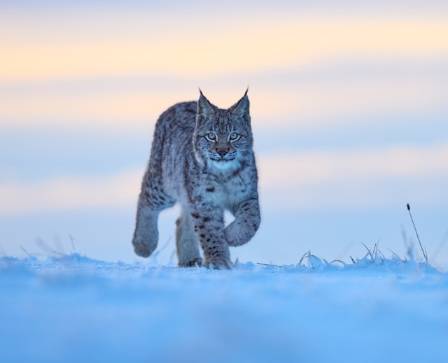
As apex predators of the alpine ecosystem, snow leopards play a crucial role in regulating the populations of their prey species, maintaining the delicate balance of their mountain habitat. Their primary food source is the blue sheep (bharal) of Tibet and the Himalayas, as well as the mountain ibex, a sure-footed goat-antelope found across most of their range. These prey animals are perfectly adapted to steep, rocky terrain, but they are no match for the snow leopard’s stealth and speed: the big cat stalks its target silently, using rock formations and snowdrifts for cover, before launching a sudden, powerful ambush. Snow leopards are so strong that they can kill animals three times their own weight, dragging their prey to a safe, elevated spot to feed undisturbed by scavengers like wolves and vultures. When large prey is scarce, they also hunt smaller animals, including marmots, hares, game birds, and even domestic livestock when wild prey is hard to find. A notable study of a protected snow leopard in an Indian national park recorded that the cat consumed five blue sheep, nine Tibetan woolly hares, 25 marmots, five domestic goats, one domestic sheep, and 15 birds in a single year—a testament to its flexible diet and hunting prowess.

Threats to Survival: Facing an Uphill Battle

Despite their formidable hunting skills, snow leopards face a litany of threats that have caused their population to decline by at least 20 percent over the past two decades. The most pressing danger is human-wildlife conflict, driven by the expansion of human settlements and livestock grazing into snow leopard territory. As herders bring more sheep and goats into the mountains, they compete with snow leopards for space, and when the big cats prey on domestic livestock to survive, herders often retaliate by killing them. Poaching is another deadly threat: snow leopards are hunted illegally for their beautiful fur, which is sold on the black market, and for their body parts, which are used in traditional Chinese medicine. Even though international trade in snow leopard parts is banned under CITES (the Convention on International Trade in Endangered Species), poaching continues to be a major problem in many parts of their range. Compounding these issues are habitat loss and the decline of wild prey species, as overgrazing by livestock destroys the vegetation that supports blue sheep and ibex. Climate change is also emerging as a critical threat: rising temperatures are melting glaciers and shrinking the alpine meadows that snow leopards depend on, forcing them to move higher up mountains in search of suitable habitat—where space is limited and competition with other predators like leopards, wild dogs, and tigers is fierce.

Conservation Efforts: Safeguarding the Mountain Ghost
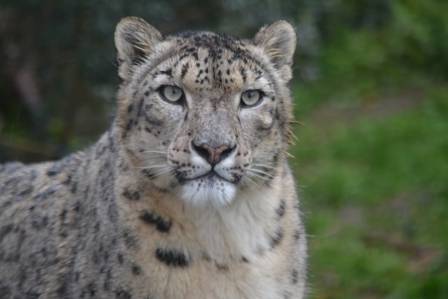
In recent years, a global, concerted effort has been launched to save the snow leopard from extinction, bringing together governments, conservation groups, local communities, and scientists. One key strategy is the establishment of protected areas throughout the snow leopard’s range, including sanctuaries in Afghanistan, Mongolia, and Kyrgyzstan. Kyrgyzstan’s mountain reserves are particularly vital, as they serve as a corridor that allows snow leopards to travel between the northern and southern ends of their range, facilitating gene flow and helping to maintain healthy, connected populations. However, creating protected areas alone is not enough: a study found that 40 percent of these reserves are too small to support the snow leopard’s wide-roaming lifestyle, meaning that many cats still venture outside protected zones where they face risks from humans. To address this, conservationists are working closely with local herders to develop non-lethal solutions to reduce human-wildlife conflict, such as building predator-proof corrals to protect livestock and implementing compensation schemes for herders who lose animals to snow leopards. Governments are also strengthening anti-poaching laws and enforcement, cracking down on illegal trade networks. Additionally, efforts to raise public awareness about the snow leopard’s role as a flagship species are underway: as a symbol of its alpine ecosystem, protecting snow leopards also helps to conserve the countless other species that share their habitat, from marmots and birds to rare plants and insects.

More from this board

NT

NOTE · en

Nine things you didn’t know about marmots

Nine things you didn’t know about marmots

Marmots are large, ground-dwelling members of the squirrel family and are among the most recognizable animals found in the Alps and other mountain regions. With their round bodies, fluffy fur, and adorable appearance, they have become beloved symbols of alpine landscapes.

NT

NOTE · en

Czech Cubism, Permanent Exhibition of the Museum of Decorative Arts in Prague (Rewritten & Expanded)

Czech Cubism, Permanent Exhibition of the Museum of Decorative Arts in Prague (Rewritten & Expanded)

Returning to a city you love is like turning the page of a book you never finished—there are always new chapters to explore, hidden corners to uncover, and stories to learn that didn’t make it into your initial visit. On a recent return trip to Prague, this sentiment felt particularly vivid. While my first visits had been filled with the iconic sights—the Charles Bridge at dawn, the grandeur of Prague Castle, the winding lanes of the Old Town—this time, I was fortunate to have a local guide by my side, someone who knew the city’s artistic pulse beyond the well-trodden tourist paths. It was through this guide that I stumbled upon the Permanent Exhibition of Czech Cubism, a self-contained treasure trove nestled within the Museum of Decorative Arts in Prague. Housed in the legendary House at the Black Madonna (Dům U Černé Matky Boží), this exhibition isn’t just a collection of artworks; it’s a portal to a pivotal moment in Prague’s cultural history, when the city emerged as one of the most important centers of the Cubist movement outside of Paris. What makes this experience even more extraordinary is that the exhibition itself is set within a Cubist masterpiece—a building that embodies the very principles of the art form it showcases. In this expanded exploration, I’ll delve into the history of Czech Cubism, the unique characteristics that set it apart from its Parisian roots, the highlights of the exhibition, and why this underrated gem deserves a spot on every art lover’s Prague itinerary.

NT

NOTE · en

The Ultimate Mattress Buying Guide: 16 Essential Questions for Better Sleep

The Ultimate Mattress Buying Guide: 16 Essential Questions for Better Sleep

Selecting a new mattress is a significant investment that directly impacts your quality of life. Given that you will spend roughly one-third of your time on this surface, finding a balance between support, comfort, and lifestyle compatibility is vital. To navigate the vast market effectively, you must evaluate your specific needs and preferences before making a purchase.

NT

NOTE · en

Redwood retreats: Best-bet cabins in our favorite parks

Redwood retreats: Best-bet cabins in our favorite parks

California’s coastal redwoods and giant sequoias create a rare kind of refuge from modern stress. Their towering trunks, dense greenery, and soft forest floors form some of the most peaceful environments in nature. Staying overnight makes the experience even more immersive, and cabins offer a more comfortable alternative to tent camping. They remove the hassle of pitching a tent or worrying about sudden weather changes, while still letting you fall asleep surrounded by ancient forest giants. You get hotel-like comfort at a lower cost, plus the added magic of massive trees right outside your door.

NT

NOTE · en

Classic Tiramisù Recipe

Classic Tiramisù Recipe

The name itself translates as “lift me up,” and while espresso plays a role, the true uplifting element is the cream. Mascarpone cheese blended with egg yolks and sugar is whipped into a silky, airy mixture that is rich enough to hold its form yet soft enough to dissolve on the tongue. Few desserts have traveled from a single Italian origin to global fame with so little change to their identity.

NT

NOTE · en

17 New Cars To Look Forward to in 2025

17 New Cars To Look Forward to in 2025

2025 promises to be a dynamic year for the automotive industry as it navigates the shift away from fossil fuels. While pure battery electric vehicles (BEV) and plug-in hybrid electric vehicles (PHEV) saw a slight sales dip early in 2024, they rebounded strongly in the second half—especially in the luxury segment—while hybrid vehicle sales surged dramatically. Embracing this unpredictability, our list of the most anticipated 2025 cars breaks from recent all-electrified lineups to include gasoline-powered options, offering something for every budget, style preference, performance craving, and vehicle type. From outrageous electric concepts to reimagined classics, these 17 models are set to define the year ahead for motoring enthusiasts.