Monday brief
Qilian Mountains: An Ecological Miracle
The name "Qilian" originates from the language of the ancient Xiongnu, who used the word to describe the sky. In this sense, Qilian Mountains can be understood as the "Mountains of Heaven."
Gavin Rhodes
Desk note
Brief tip
The full sticky-note brief continues below on the Monday desk.
Board
Desk Notes
The name "Qilian" originates from the language of the ancient Xiongnu, who used the word to describe the sky. In this sense, Qilian Mountains can be understood as the "Mountains of Heaven."
During the reign of Emperor Wu of the Han Dynasty, the famous general Huo Qubing defeated the Xiongnu in a major campaign, bringing the magnificent mountain range along the southern edge of the Hexi Corridor under Han control. From that time onward, the Qilian Mountains became a natural protective barrier along the Silk Road and a quiet witness to centuries of interaction between Eastern and Western civilizations. The Tang Dynasty poet Li Bai famously wrote here, "Though dwelling by Mount Yanzi, one feels not the biting cold of the snow." The remarkable phenomenon known as "June Snow in Qilian" has also inspired poets and scholars for generations.
The Road to Renewal: From Environmental Damage to National Park
The contemporary history of the Qilian Mountains tells a remarkable story of ecological recovery and sustainable development.
Around 2000, extensive mineral extraction and hydropower development had turned the region into an important resource base in northwestern China. Years of industrial activity left visible scars, including bare slopes, deteriorating grasslands, and muddy waterways.
After 2010, a large-scale campaign for ecological preservation and comprehensive restoration was introduced across the Qilian Mountains. Mining permits were withdrawn, numerous operations were closed, and small hydropower facilities were brought under tighter regulation. Environmental protection was placed at an unprecedented level of importance.
From 2017 onward, the Qilian Mountains National Park system entered its pilot phase, following the principle of creating a park without carrying forward existing ecological problems. Forest coverage has gradually expanded, while populations of wildlife including snow leopards, white-lipped deer, and black-necked cranes have shown signs of recovery.
From 2020 onward, the region began receiving greater attention as an ecological tourism destination. By 2025, the Qinghai section of the Qilian Mountains National Park pilot area had received a cumulative 145,000 eco-tourists, providing a visible example of the idea that healthy ecosystems and valuable natural landscapes can become important assets.
Must-See Wonders: A Blend of Nature and Culture
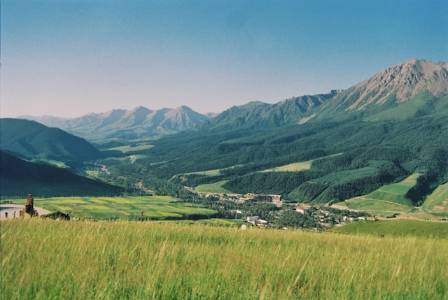
The Qilian Mountains present an extraordinary combination of snow-covered peaks, expansive grasslands, deep valleys, and historical culture. The landscape changes dramatically with elevation, season, light, and climate, creating a rich natural tapestry.
Snow-Covered Peaks: The Natural Water Reservoir of the Qinghai-Tibet Plateau
The Qilian Mountains contain 3,306 glaciers covering roughly 2,062 square kilometers. These glaciers provide an essential source of water for the Hexi Corridor and function as an important ecological lifeline for the surrounding region. Mount Tuanjie, the highest summit, reaches 5,808 meters and remains covered in snow throughout the year. The "July 1st Glacier" is also regarded as one of Asia's more accessible glaciers because it lies relatively close to a paved road.
Bayi Glacier
Located in Qilian County, Bayi Glacier is a secluded natural attraction deep within the mountains. With professional guides, visitors can approach the striking layers of blue ice formed over extremely long periods, experiencing both the immense scale and delicate nature of a glacier.
Visitors should note that access requires a research permit obtained in advance, and climbing without authorization is strictly prohibited.
Gangshika Snow Peak
Gangshika Snow Peak rises to 5,254.5 meters and is often described as an ideal first major snow mountain for aspiring mountaineers. Viewed from a distance, its summit frequently appears and disappears among clouds and mist, creating a dreamlike alpine scene.
Winter and early spring are particularly suitable for snow viewing. Although the snowline rises during July and August, the summit remains visibly snow-covered.
Vast Grasslands: One of China's Six Most Beautiful Grassland Regions
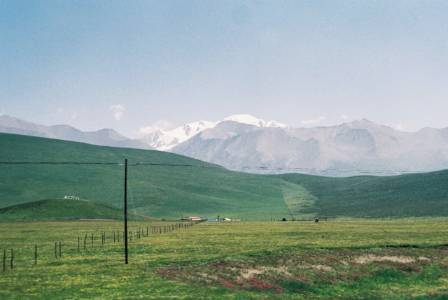
Qilian Mountain Grassland is widely recognized as one of China's six most beautiful grassland areas. During July and August, the meadows become intensely green, while cattle and sheep graze across the open landscape beneath distant snow-covered peaks.
Qilian Mountain Grassland
Visitors can ride horses across the broad grasslands and experience the classic highland scenery described in traditional pastoral poetry. During summer, travelers can also stay with local herding families. A homestay experience costs approximately 50 RMB per hour and may include wearing traditional Tibetan clothing, trying to milk yaks, and joining an evening grassland bonfire beneath the Milky Way.
Ebao Grassland
Ebao Grassland lies in the eastern part of Qilian County in Qinghai's Haibei Prefecture. The area once served as a meeting point between the ancient Tang-Tubo Road and the Qiangzhong Road and became known as the "Northern Gateway to Qinghai."
Its elevated position provides excellent opportunities to photograph snow-capped mountains rising behind expansive grasslands.
Dramatic Valleys: Canyons, Danxia Landscapes, and Glacial Remains
The Qilian region extends beyond its gentle meadows and snowy mountains. Deep canyons, colorful Danxia formations, and remnants of ancient glaciers create another layer of scenery.
Zhuoer Mountain
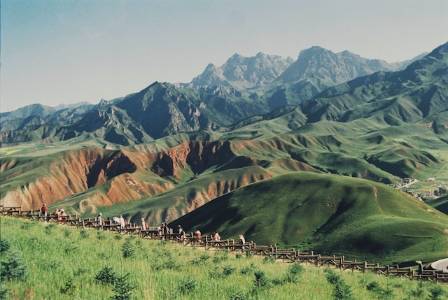
Often called the "Switzerland of the East," Zhuoer Mountain is famous for the contrast between reddish sandstone formations and surrounding fields of golden rapeseed flowers.
The Beacon Tower Observation Deck is a particularly suitable place for photography. Early in the morning, sunlight can illuminate Niuxin Mountain and create the striking "Golden Summit" effect. Admission is 60 RMB, and arriving before 6:00 AM is recommended.
Biandukou Canyon
Biandukou Canyon lies along the boundary between Minle County in Zhangye, Gansu, and Qilian County in Qinghai. Historically, it was an important passage along the Silk Road.
National Highway G227 runs through the canyon and includes 12 designated viewing platforms. In July, thousands of acres of golden rapeseed flowers and green highland barley create an enormous natural composition across the valley.
Heihe Grand Canyon
The Heihe River travels for more than 800 kilometers through the Qilian Mountains, carving deep and rugged valleys into the landscape. Along the Erga Highway, travelers encounter constantly changing scenery, including snowy peaks, open grasslands, and dramatic canyon walls.
Photography Tips
The Zhuoer Mountain viewpoint is well suited to sunrise photography and wide panoramic images of the Danxia landscape.
The G227 near Biandukou provides excellent opportunities for road photography and expansive views of the golden rapeseed fields.
Bayi Glacier is the place to capture the striking blue-ice formations, and a telephoto lens can be useful.
The Erga Highway is particularly suitable for aerial photography, allowing the sweeping shapes of the canyon to be captured from above.
Deep in the grasslands, early morning mist combined with changing sunlight and shadows can create a peaceful setting for quiet reflection, meditation, or simply enjoying the natural surroundings.
Cultural Heritage: Living Memories of the Silk Road
The Qilian Mountains are more than a natural landscape. They also form a living cultural region where traditions from several ethnic communities have developed alongside the ancient Silk Road.
Arou Great Monastery
Arou Great Monastery is a Tibetan Buddhist temple known for its relatively authentic and tranquil atmosphere. Its golden prayer-wheel corridors stand out against the surrounding snow-covered mountains.
Between 15:00 and 16:00, visitors may observe monks participating in traditional scripture debates. A hillside behind the monastery also provides a less obvious location for panoramic photographs.
Mati Temple Grottoes
Located in Sunan Yugur Autonomous County in Zhangye, Mati Temple combines Buddhist grotto art, religious traditions, and local ethnic culture.
The site was originally established during the Northern Liang Dynasty and has a history of more than 1,600 years. The Thirty-Three Heavens Grottoes, positioned high along the cliff face, are among its most remarkable features.
Tibetan Cultural Experiences
Qilian County and the surrounding area are home to Tibetan, Hui, Mongol, Yugur, and other communities. Visitors can stay in traditional Tibetan tents, taste butter tea and tsampa, and take part in local traditions such as Guozhuang circle dancing and horse racing.
Silk Road Historical Remains
The Qilian Mountains once formed an important section of the ancient Silk Road. Numerous historical remains and frontier sites survive in the wider region, including Jiayuguan Pass and the Han Dynasty tombs associated with the Black Water Kingdom. Together, these sites preserve evidence of centuries of communication and cultural exchange between East and West.
Core Experiences: Exploring the Highland Wilderness
A complete journey through the Qilian Mountains can combine mountain scenery, grassland culture, glacier exploration, local cuisine, and scenic road trips.
Climb Zhuoer Mountain for Sunrise
Arrive at the Beacon Tower viewing platform before 6:00 AM. Watch the morning sun spread across the red sandstone peaks while nearby snow-covered Niuxin Mountain gradually turns golden. The combination of warm light, rugged rock, and distant snow creates the dramatic atmosphere associated with the "Switzerland of the East."
Ride Across the Qilian Grasslands
Horseback riding provides a direct way to experience one of China's most celebrated grassland landscapes. Visitors can also put on traditional Tibetan clothing, try milking yaks, and participate in an evening bonfire gathering.
In late July, the enormous rapeseed fields around Menyuan become another seasonal highlight, with golden flowers stretching toward snow-covered mountains.
Discover Bayi Glacier
A scientific research permit should be obtained approximately one week before visiting. Travelers must be accompanied by a qualified professional guide, and independent climbing is not permitted.
Recommended equipment includes a windproof outer layer, trekking poles, a portable oxygen cylinder, and sunglasses because sunlight reflected from snow can be extremely intense.
Taste Highland Specialties
Local dishes worth trying include hand-grabbed mutton, yak hotpot, yellow mushroom stewed with mutton, and Qilian fried noodles.
For snacks and drinks, visitors can try yak yogurt mixed with roasted barley flour, butter tea, tsampa, and freshly grilled mutton skewers.
Tibetan-style restaurants around the Babao River in Qilian County and the Ganzhou Night Market in Zhangye provide opportunities to sample local food.
Drive Along G227
National Highway G227 between Xining and Zhangye is often described as one of China's most scenic national highways.
The road connects a remarkable sequence of landscapes, including snow-covered mountains, grasslands, canyons, and rapeseed fields. The Biandukou viewing platform is a useful stop for looking across the Hexi Corridor.
Suggested Travel Plans
One-Day Qilian Highlights Route
Begin in Qilian County in the morning and travel to Zhuoer Mountain Scenic Area for a two-hour sunrise experience. Continue to Arou Great Monastery for approximately one hour, followed by a 1.5-hour horseback-riding experience on the Qilian grasslands.
Have lunch at a Tibetan homestay or restaurant on the grasslands. In the afternoon, continue along G227 to the Biandukou scenic viewpoint for approximately one hour before returning to Qilian County or continuing toward Zhangye.
This schedule is relatively fast-paced, so hiring a private vehicle or driving yourself is recommended. Because the region is at high elevation, visitors should protect themselves from strong sunlight and bring sufficient warm clothing.
Three-Day Immersive Qilian Journey
On the first day, arrive in Zhangye or Xining and travel by chartered vehicle toward Qilian County, passing Biandukou and Ebao Grassland along the way. Check into a boutique guesthouse in Qilian County, preferably one with views toward the snow-covered mountains. In the evening, walk beside the Babao River and sample local specialties.
On the second day, climb Zhuoer Mountain early in the morning for sunrise. Later, travel deeper into the Qilian grasslands and experience elements of traditional pastoral life, including horseback riding, yak milking, and preparing tsampa. Visit Arou Great Monastery in the afternoon, then spend the night in a traditional grassland tent or return to Qilian County.
On the third day, travel toward Bayi Glacier with a local guide arranged beforehand. Stop along the mountain road to photograph the scenery before returning to Qilian County or continuing toward Zhangye in the afternoon.
Travel Planning and Local Transportation
The Qilian Mountains cover a very large area, and there are no high-speed railway stations or airports directly inside the principal scenic areas. Xining, Zhangye, and Lanzhou are the main transportation hubs for reaching the region.
Reaching Xining
Travelers coming from other parts of China can use high-speed rail or flights. Xining Caojiabao Airport provides air connections with major cities, while Xining High-speed Railway Station links the city with destinations throughout the country.
Xining to Qilian County
Driving yourself or hiring a private vehicle is recommended. The journey takes roughly 4.5 hours and follows G227, passing the Dabanshan viewing platform along the way.
Zhangye to Qilian County
The drive from Zhangye to Qilian County takes approximately three hours. The route passes through Biandukou and Ebao Grassland and offers considerable scenic interest along the way.
Transportation Within Qilian County
Private vehicles or rental cars are convenient options. A private charter generally costs around 400–500 RMB per day, and using a local driver familiar with road conditions can be particularly helpful.
Visitors should be aware that unauthorized tourism and adventure activities are prohibited within the core and buffer areas of Qilian Mountain National Park. Travel should be limited to officially designated, developed, and open locations, and restricted sections of the nature reserve must not be entered.
Best Seasons for Visiting
The Qilian Mountains offer distinctive scenery throughout the year, but July through August and September through October are generally the most attractive periods for experiencing the region.
July to August: Peak Summer Season
During these months, the grasslands are lush and green, rapeseed fields reach full bloom, and daytime temperatures are generally comfortable at around 15°C to 25°C.
Menyuan's rapeseed flowers typically reach their peak around the middle to latter part of July, making this period particularly appealing for photography.
September to October: Autumn Landscape
In autumn, the grasslands become golden and the surrounding foliage develops rich seasonal colors. Visitor numbers also decline, creating more peaceful conditions for photography.
Late September can provide a particularly balanced combination of scenery, weather, and relatively low visitor density.
May to June: Lower-Cost Season
During late spring and early summer, the grasslands gradually become greener while tourist numbers remain relatively low. Accommodation can also be more affordable, making this period suitable for travelers seeking a more economical trip.
December to February: Quiet Winter Season
Winter brings clearer views of the snow-covered peaks and opportunities to see spectacular blue-ice formations. However, certain scenic locations may close during the coldest months.
Anyone visiting during winter should prepare appropriate cold-weather clothing and equipment because conditions in the highlands can be severe.
More from this board
NOTE · en
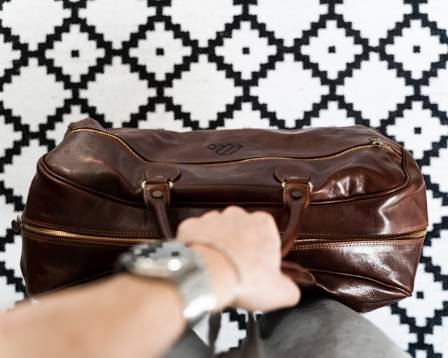
5 Essential Bags Every Stylish Man Should Own
A man’s choice of bag is more than just practicality—it reflects taste, lifestyle, and maturity. While a worn-out backpack might have been fine during school years, a curated selection of functional yet fashionable bags signals true sophistication. From professional settings to weekend getaways, these five bag styles cover every scenario a modern gentleman might face.
NOTE · en

The Five Most Renowned Landmarks in France
France is renowned for its rich history and stunning landmarks, many of which are concentrated in Paris. However, beyond the capital city, the entire country boasts a wealth of historical treasures, each telling a unique story and leaving a lasting impression on visitors. Here are five must-visit landmarks that epitomize France's cultural and architectural significance:
NOTE · en

How to become an astronaut
Becoming an astronaut is far from an easy or direct career path. There is no dedicated school or standard university program that automatically prepares someone to become an astronaut. So, what does it take to enter this profession, and which qualifications, abilities, and personal qualities are important?
NOTE · en
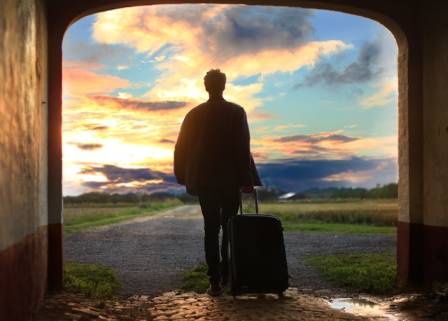
The Life-Changing Value of Exploring the World
Journeying beyond familiar surroundings does far more than provide temporary escape—it transforms perspectives, deepens understanding, and reshapes lives in profound ways. Whether venturing to neighboring towns or distant continents, travel serves as one of the most enriching experiences a person can pursue. Here’s why stepping outside your comfort zone and embracing new horizons matters more than you might realize.
NOTE · en
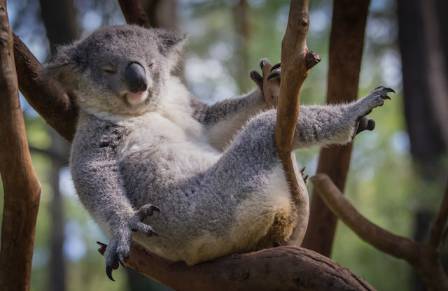
Interesting Koala Facts
Koalas aren’t bears. They’re marsupials, meaning their young are born underdeveloped and then continue developing in the mother’s pouch.
NOTE · en

Purse Styles for Every Occasion
No matter how carefully you put together your wardrobe, the handbag you choose can completely transform your overall appearance. Whether you are heading out for daily errands, attending a professional meeting, or dressing up for a special occasion, the right bag can elevate your outfit and complete your style.