Monday brief
The Arctic Travelers of the Deer Family
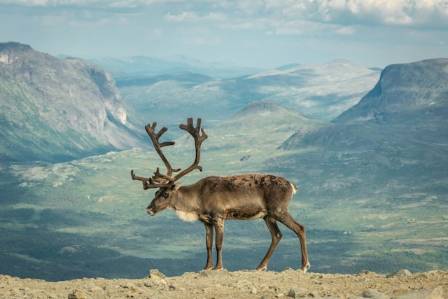
Caribou and reindeer are large hoofed members of the deer family. Although they are commonly known by two different names, both belong to the same species, Rangifer tarandus.
Maelis Grant
Desk note
Brief tip
The full sticky-note brief continues below on the Monday desk.
Board
Desk Notes
Caribou and reindeer are large hoofed members of the deer family. Although they are commonly known by two different names, both belong to the same species, Rangifer tarandus.
The distinction between the names is mainly geographical. Caribou are native to North America, while reindeer are primarily associated with northern parts of Europe and Asia. Some reindeer can also be found in Alaska, where animals were brought from Siberia during the late 19th and early 20th centuries.
The term “reindeer” is often connected with domesticated animals, particularly those featured in stories about Santa Claus. In reality, reindeer can be either wild or domesticated. The term caribou, on the other hand, is generally used for wild populations that roam across enormous northern regions and undertake seasonal migrations.
Indigenous peoples, such as the Sami of northern Scandinavia and the Nenets of Arctic Russia, have raised reindeer for generations and depended on them for food and other valuable resources. This long history of domestication may have played a role in giving domestic reindeer a more solid and compact build than their wild caribou relatives.
The Great Migration
Caribou carry out one of the most remarkable migrations performed by any land mammal. With the arrival of summer, enormous herds head north along established routes that have been used by successive generations.
Some herds travel distances of up to 800 miles (1,300 kilometers) before reaching their summer feeding grounds. During the warmer season, the animals take advantage of the abundant vegetation across the Arctic tundra, eating grasses and other available plants. An adult caribou may consume approximately 12 pounds of food each day during this time.
Summer is also the period when female caribou give birth to their calves.
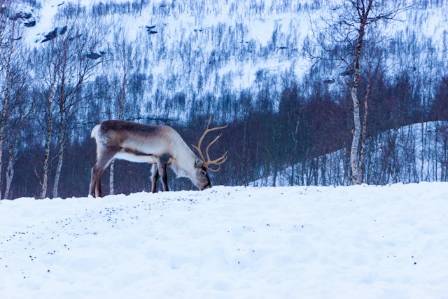
Once winter approaches and substantial snowfall begins, the animals start moving south again. Female caribou, commonly called cows, generally begin the return migration before the males. The males later follow together with younger animals from the previous breeding season.
Throughout winter, the herds seek regions that offer greater protection against severe weather. Their diet during this season consists largely of lichens.
Wild caribou generally have slimmer bodies and longer legs than domesticated reindeer. These physical characteristics are likely useful adaptations for covering the enormous distances required during migration. Female caribou typically produce a single calf each year. Calves grow rapidly after birth and are capable of standing within only a few minutes, enabling them to begin following their mothers shortly afterward.
Special Hooves and Antlers
Caribou and reindeer have evolved large, highly specialized hooves that allow them to function effectively in demanding northern habitats.
Their wide feet help distribute their weight when crossing deep snow, while also serving as efficient paddles when the animals swim. The underside of each hoof is somewhat hollow and can act like a scoop, allowing caribou to scrape through snow in search of food. The sharp edges of their hooves also provide traction when moving across ice and rocky terrain.
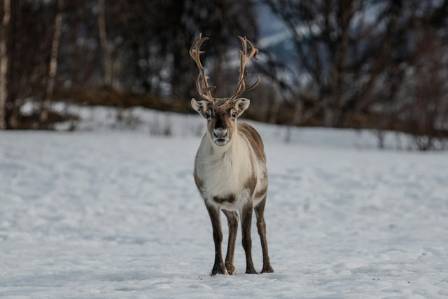
Caribou are unusual among deer because both males and females are capable of growing antlers, although antler development does not occur in every female.
Male reindeer generally shed their antlers in late fall before growing a new set during winter. Since males normally lose their antlers before the holiday season, scientists have jokingly suggested that Santa Claus's reindeer would therefore be more likely to be females.
Conservation Challenges
Caribou are currently considered vulnerable to extinction, indicating that their populations face substantial risks of decline.
Their dependence on extensive migration corridors makes them especially sensitive to environmental changes. Human infrastructure, including roads, fences, and other forms of development, can obstruct established routes and disrupt the seasonal movements on which the animals depend.
Changes to habitat caused by activities such as logging can create additional problems. Altered landscapes may make caribou more exposed to predators, including wolves, by opening access to places that previously offered greater protection.
Climate change adds another serious pressure. Rising temperatures across the Arctic may leave caribou and reindeer increasingly susceptible to diseases and parasites, which can spread quickly when large numbers of animals gather together in herds.
More from this board
NOTE · en
A Journey Beyond Earth: The Evolution of Space Exploration
Since ancient times, humans have gazed at the stars, filled with wonder about what lies beyond our world. This fascination eventually led to technological advancements that allowed us to break free from Earth’s gravity and begin exploring outer space.
NOTE · en
Understanding the Essence of Slow Living: A Journey to Mindful Living
Slow living is not merely a trend; it's a profound mindset that encourages you to curate a lifestyle aligned with your core values. It champions the idea of doing everything at the right pace rather than racing through life. The slow movement emphasizes doing things better, not faster. This approach entails slowing down, doing less, and dedicating time to the things that hold the utmost significance in your life.
NOTE · en
Plum Blossoms: The Best Early Spring Flower
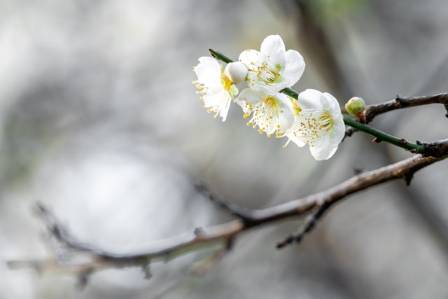
Plum blossoms in Japan are truly breathtaking. If you are considering a spring trip to Japan for the cherry blossom season, the Ume Matsuri, or plum blossom festival, held around mid-February, is an excellent alternative. This traditional celebration allows visitors to experience Japan’s floral beauty without the massive crowds and high travel costs often associated with sakura season. Hanami, the Japanese custom of enjoying seasonal flowers, includes both plum blossoms and cherry blossoms.
NOTE · en

The Great Barrier Reef: A Natural Wonder Facing Change and Recover
Australia’s Great Barrier Reef is one of the planet’s most extraordinary natural treasures. This vast underwater ecosystem covers an area comparable to a small nation and contains an incredible variety of marine habitats, colorful coral communities, and unique ocean life.
NOTE · en

AI Guides Drones in Uncertain Environments
An autonomous drone tasked with dropping water to fight a wildfire in the Sierra Nevada could face powerful, shifting Santa Ana winds that push it off its intended path. Adjusting to these unpredictable disturbances in real time is a major challenge for any flight control system.
NOTE · en

The Art of Anime Character Design
Creating original anime characters is not an easy task. The anime world is already filled with iconic designs that have shaped global pop culture. Designers often face difficulties such as standing out in an oversaturated industry, balancing tradition with fresh ideas, and appealing to both domestic and international audiences. For beginners, entering such a competitive field can feel overwhelming without proper direction.